woodland, wildlife & wonderful people
What began as a wildlife photography weekend became something far more memorable. Over three days, I explored ancient woodland, discovered a new favourite Peak District location, spent time with a community of passionate photographers and, somewhere between rivers, sunrises and conversations on trails, was reminded why I love photography and the outdoors and what it does for people’s mental health.
The reason for the trip was a meet-up organised through The Wild Den, a growing community created by wildlife photographer and creative genius Andy Green, a good friend of mine but more on that later. Built around a shared passion for wildlife, photography and personal growth, The Wild Den brings together photographers of all abilities to learn, share experiences and support one another both behind the camera and beyond it.
This was the first Wild Den meet-up, and I am so happy that I decided to join and to get involved, it became one of those weekends that gives you exactly what you needed — fresh air, good company, quiet moments, plenty of laughter and an atmosphere that makes the world feel a little larger again.
The first wild den meet-up at Cannock Chase
Friday — Back to a Place That Means Something
A day off work and the alarm still went off at 5am on Friday morning.
Three hours of driving and around 150 miles lay ahead of me, but I didn’t mind in the slightest because the destination was Padley Gorge — somewhere that has become an important place for me.
Nestled within the Dark Peak area of the Peak District National Park, Padley Gorge is a designated Site of Special Scientific Interest and is widely regarded as one of the finest surviving examples of ancient woodland in the region. Home to oak, birch and rowan trees, with Burbage Brook winding its way through the valley floor, it is a place that feels wonderfully untouched by modern life.
Padley Gorge is one of those locations that instantly brings a sense of calm as soon as you step out of the car.
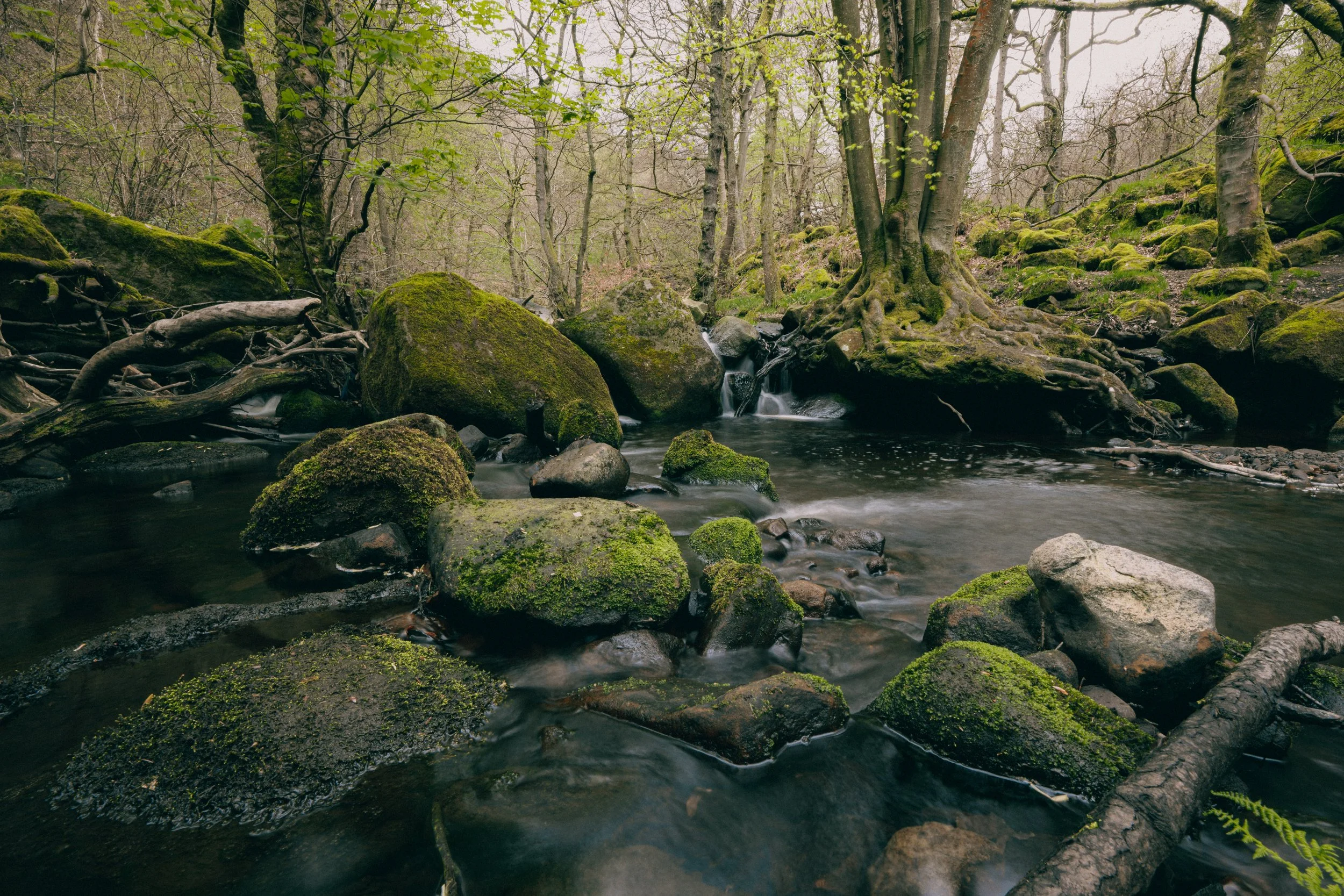
Ancient woodland has always felt like one of the most special environments to me, but throw a river into the middle of it and it becomes something else entirely. Moss-covered rocks, twisted roots, old trees leaning over the water, and the constant sound of the river weaving its way through the gorge over stone. There had been no recent heavy rain, so the flow was gentle and peaceful rather than dramatic, but somehow that suited the mood perfectly.
Burbage Brook at Padley Gorge
The weather was better than forecast, although not sunny, which for this kind of woodland was ideal. A slightly moody sky gave everything a richer tone and brought out the textures in the bark, rocks and foliage. It felt atmospheric, peaceful and quiet — especially with very few people around thanks to it being a weekday. For most of the morning, I pretty much had stretches of the river entirely to myself.
That solitude is part of why Padley Gorge means so much to me.
I first came here during a particularly difficult chapter of my life, when mentally I was not in the best place and finding joy in much of anything felt like hard work. This woodland was one of the first places where I remember genuinely feeling the beauty of somewhere again. It sounds dramatic written down, but certain places stay with you for reasons beyond scenery, and Padley Gorge is one of those places for me.
This visit was meant to be a mixture of landscape photography and a hopeful search for spotted flycatchers.
Before you get too excited, the flycatchers did not show.
The landscapes did — sort of.
Well, the landscapes were most definitely there. The bigger question was whether I was capable of capturing them and doing them justice. On this particular visit, I think the honest answer is probably no.
Landscape photography remains something I am still learning to feel truly comfortable with and, despite how photogenic Padley Gorge is, I found compositions surprisingly difficult. I came away with only two or three images that I was happy with, which is not a complaint, more a reminder that beautiful locations do not automatically make easy photographs.
In some ways, that is exactly what keeps drawing me back. Places like Padley Gorge always leave me feeling inspired, but they also leave me feeling like there is more to learn and another image waiting to be made.
A mediocre photo of a wonderful landscape
The Mandarin Duck, The Wet Leaves and the Near-Death of My Dignity
All the while I was at Padley Gorge, I had The Wild Den Weekend Challenge in the back of my mind. One of the things I enjoy most about these challenges is that they encourage us to step outside our comfort zones and think differently about our photography. This month's theme was simple enough on paper: frame a subject through soft, out-of-focus foreground.
Simple in theory, at least.
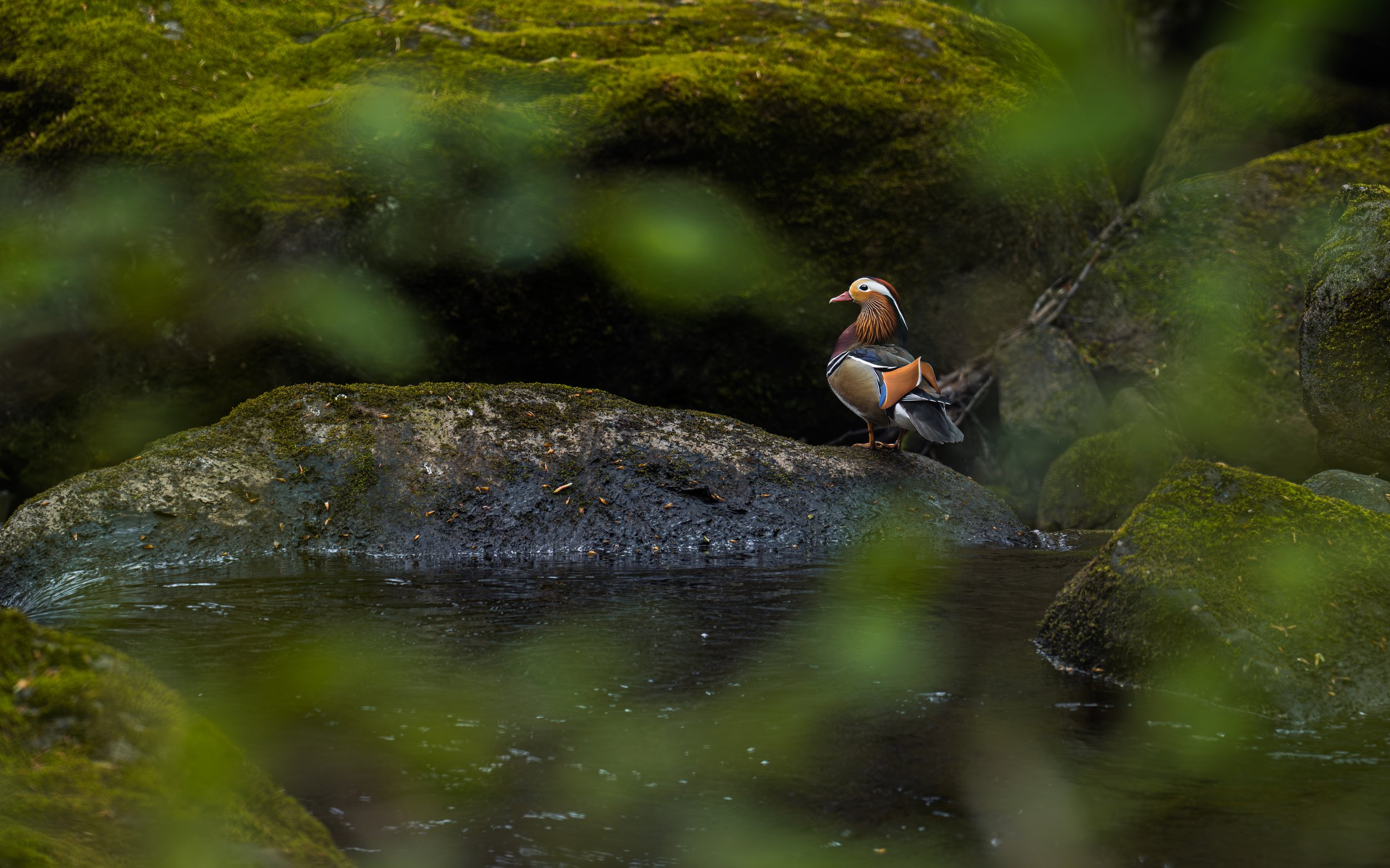
While wandering through the gorge, I spotted what looked like the perfect candidate — a beautifully coloured mandarin duck perched on a rock in the middle of the river. Between me and the duck sat a tree full of lush green spring leaves, exactly the kind of foreground I had been looking for. The only minor issue was the steep bank covered in wet leaves separating us.
Naturally, common sense was ignored.
Photography has a strange ability to make you braver than you really are. For example, I am not particularly fond of spiders, yet put a camera between me and one and I'll happily find myself lying on the ground inches away trying to get the perfect shot.
The same logic apparently applies to steep riverbanks.
So, camera in hand, telephoto lens attached and backpack loaded with far more expensive equipment than I care to think about, I carefully scrambled down the slope. Somehow, against all odds, I made it safely to the bottom.
Even better, the mandarin duck was still there.
I settled into position with the leafy foreground between myself and the duck, which had conveniently perched itself in exactly the right spot. Everything came together perfectly. The composition worked, the duck cooperated and, for a brief moment, I looked like I knew exactly what I was doing.
Success.
I managed a few more frames before the duck eventually decided it had tolerated enough of my wildlife paparazzi antics and drifted off downstream.
Then came the climb back up.
About halfway up the bank, my footing disappeared entirely.
The ground was carpeted with leaves left over from autumn, and hidden beneath them was a hole I hadn't seen. One second I was climbing, the next I was crashing sideways onto my hip and sliding back towards the river with absolutely no control whatsoever.
Panic set in immediately.
Not because I was worried about myself, of course. I was clutching my camera like a newborn child while a backpack full of camera gear, a tripod and a laptop bounced around behind me.
I got very, very close to becoming part of the river.
In fact, one foot actually entered the water before I came to a rather undignified stop. Thankfully, the river was shallow in that area, but that would have done little for my camera gear.
For a few seconds I simply lay there, taking stock of the situation and wondering how I would explain to people that I had sacrificed thousands of pounds worth of equipment in pursuit of a duck.
Fortunately, disaster was avoided.
The camera survived.
The laptop survived.
My dignity suffered a minor injury but is expected to make a full recovery.
Most importantly, I got the shot.
And as every wildlife photographer knows, photos are forever. Pride is temporary.
Male mandarin duck at Padley Gorge
Bakewell, Pigeons and Appreciating the Ordinary
With a few hours to spare before heading south towards Cannock Chase for the Wild Den meet-up the following morning, I decided to stop in another Peak District favourite of mine — Bakewell.
Any visit to Bakewell feels incomplete without acknowledging the famous Bakewell pudding, and more specifically, the legendary Old Original Bakewell Pudding Shop, which feels as though it has been woven into the town's identity for generations.
Lunch was a simple chicken and bacon sandwich by the river as a light drizzle began to fall.
I stayed put.
Hood up, camera by my side and with nowhere I urgently needed to be, I sat on a bench and enjoyed every moment of it. There is something deeply calming about sitting beside running water while rain patters gently around you. No agenda, no rush, just a chance to pause and enjoy where you are.
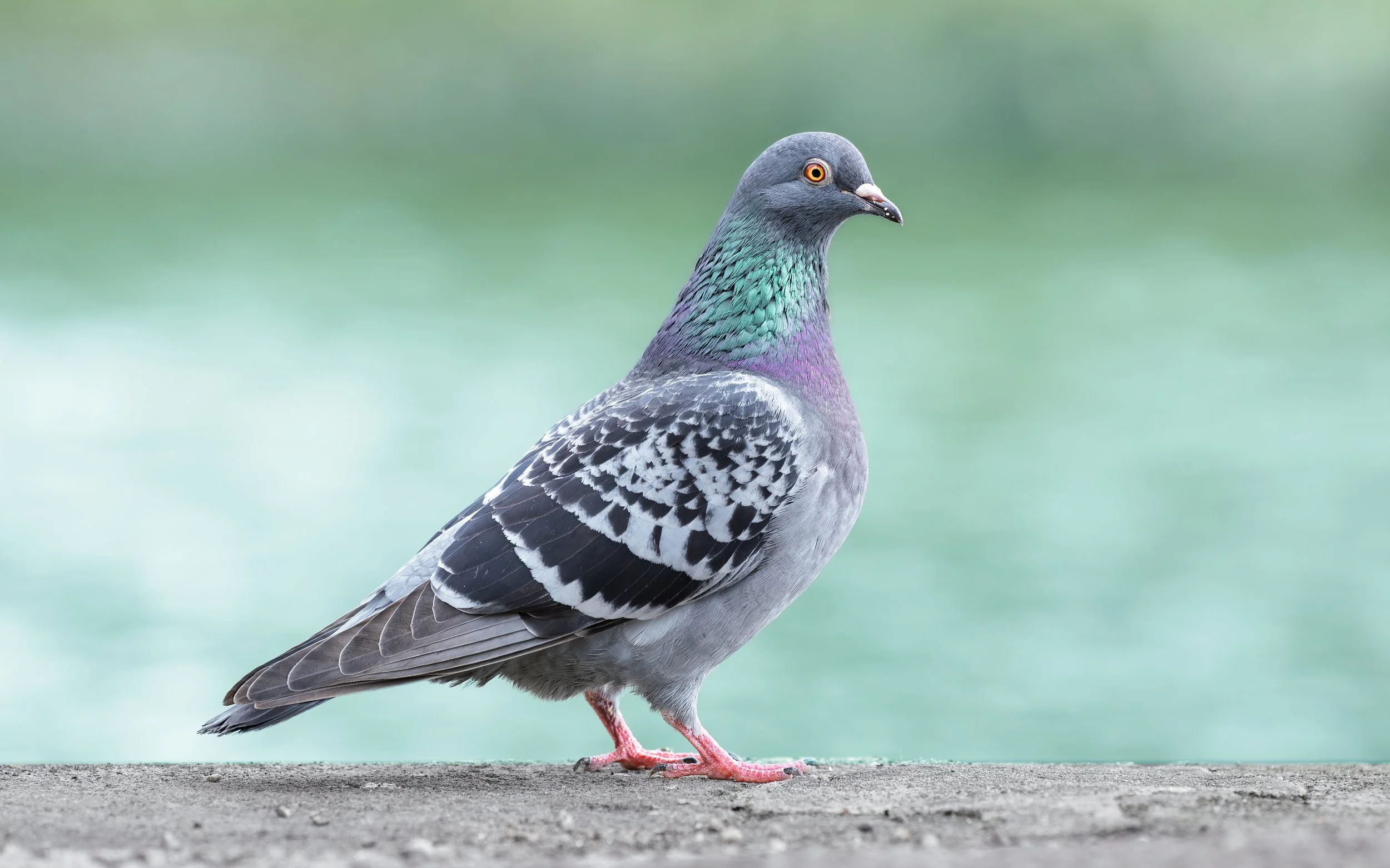
As I ate, I spent some time photographing a few of the town's urban pigeons. Along that particular stretch of riverside walk there always seems to be an abundance of pigeons, ducks and geese, all seemingly unfazed by the steady flow of people passing by.
They are not exactly headline wildlife.
And that was precisely the point.
It reminded me of something Andy Green often does exceptionally well — finding beauty, interest and artistry in the subjects most people walk straight past.
The more time I spend behind a camera, the more I find myself drawn to that idea.
As wildlife photographers, we all have what I have started calling our "celebrity species". The birds and animals that instantly grab our attention. Kingfishers. Barn owls. Ospreys. Puffins. The species that generate excitement the moment somebody mentions them.
Yet in chasing those celebrity species, I sometimes wonder if we overlook the wildlife we encounter every single day.
Why do we stop for a kingfisher but walk past a pigeon?
Why do we celebrate a rare visitor while ignoring the starling perched on a nearby fence?
When you slow down enough to really look, pigeons can be remarkably beautiful birds. Their plumage contains iridescent flashes of turquoise, purple, emerald and bronze that would not look out of place on some of our most sought-after species. We often describe kingfishers as colourful because of their brilliant blue and orange feathers, yet some of the colours hidden within a pigeon's plumage are equally striking.
The difference is not the bird.
The difference is usually the attention we choose to give it.
That challenge of making the ordinary look extraordinary is something I enjoy more and more, and Bakewell provided the perfect opportunity to practise exactly that.
A couple of those pigeon images turned out rather nicely too, helped enormously by my trusty 70–200mm lens. It continues to prove itself as one of the most versatile lenses I own and, at the moment, is probably my favourite piece of kit. The only downside is that it occasionally leaves me wishing wildlife would be just a little more cooperative and stand a bit closer.
Still, if photography teaches you anything, it is patience.
Ordinary or extraordinary?
Through the Peaks and Towards Something New
From Bakewell I took the scenic, deliberately non-direct route down toward Staffordshire.
If you are driving through the Peak District, rushing feels like a waste. On more than one occasion I found myself wanting to pull over, step out of the car and start photographing straight from the roadside. But with no safe places to stop — and no desire to risk becoming that person standing on a blind bend with a telephoto lens — I kept moving.
The roads wound through rolling hills and stone villages that, to me, feel like England at its finest, at its prettiest. There is a timelessness to it all; the kind of landscape that makes you feel as though you have slipped back a few decades without really noticing. Where I grew up, there is none of this. My part of the country is best described as a symphony of concrete, so stretches like this always feel a little special.
Throughout the drive, anticipation quietly built for the following morning. I was genuinely excited.
A few years ago, I would not have even considered travelling this far to meet a group of people I had never properly met in person. At that point in my life, confidence was something I simply did not have. I had been dealing with quite severe anxiety, and trips like this would have been firmly off the table. In many ways, wildlife and photography became the thing that slowly helped shift that — giving me a reason to get outside, to explore, and eventually to start saying yes to things like this.
Most of the people I was meeting through The Wild Den I had spoken to in some form beforehand, but meeting in person is always something different. There is always that strange mix of familiarity and uncertainty — profile pictures become real faces, usernames turn into conversations, and online presence becomes something much more human.
By the time I eventually arrived and settled for the evening, the weekend already felt real rather than theoretical — something I was actually part of, not just something I had signed up to.
And with that, I was ready for whatever Saturday morning was going to bring.
Saturday: Sunrise, seventeen Photographers & Cannock Chase
I arrived at Cannock Chase at around 6am to an absolutely unbelievable sunrise.
The sky was glowing, the air was still, and there was barely a breath of wind. The kind of morning where everything feels paused for a moment, as though the world is holding its breath before properly waking up. It is one of my favourite times to be outside — when there is a quiet that you only ever seem to find at that hour.
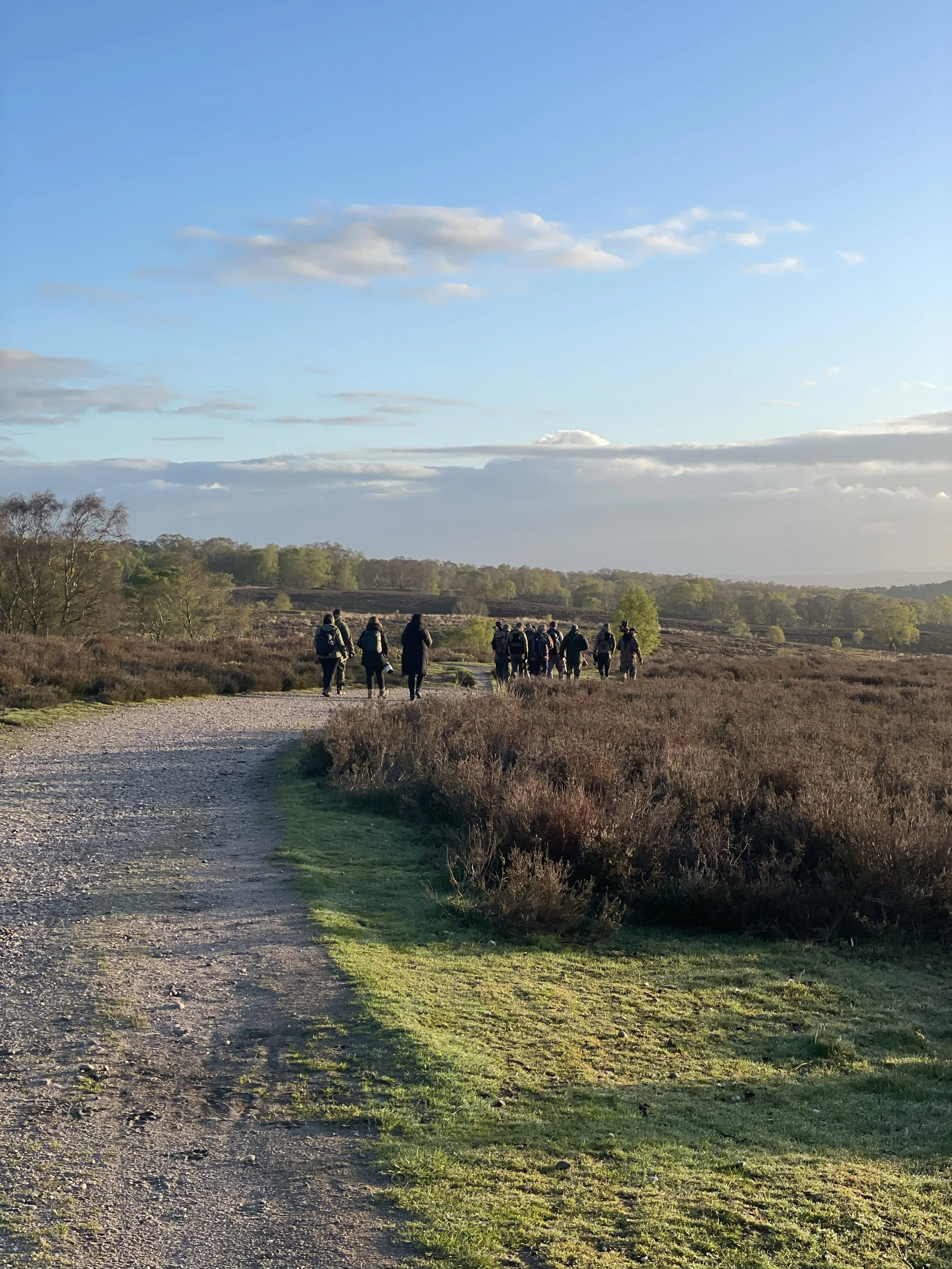
iPhone shot - Cannock Chase at sunrise
For a first Wild Den meet-up, the turnout was fantastic. There were seventeen of us in total, and it was hard not to feel genuinely proud of what Andy has created. What started as a passion project online is quickly growing into something much more meaningful — a real community built around shared enthusiasm, support, humour and, perhaps most importantly, very little ego.
It was a group of like-minded individuals, each with their own story and their own reason for being there, all brought together by a shared interest in wildlife and photography.
That tone carried through the entire day.
Everyone was welcoming, knowledgeable, easy to talk to and up for a laugh. Any initial awkwardness disappeared almost immediately, replaced by conversation, shared excitement and the simple ease that comes from being around people who understand why you are standing in a field at sunrise with a camera.
Before long, it stopped feeling like a structured meet-up altogether and instead felt like a group of friends wandering through the landscape together, cameras in hand, just enjoying being outside.
A huge credit also has to go to Mike Phelps, another good friend of mine and our local expert for the day. He very kindly helped guide us around Cannock Chase and pointed us in the right direction throughout, drawing on his experience of having explored the area many times before. His knowledge added a huge amount to the day and helped everything flow effortlessly from one location to the next.
Wildlife, Walking and the Reality of Group Photography
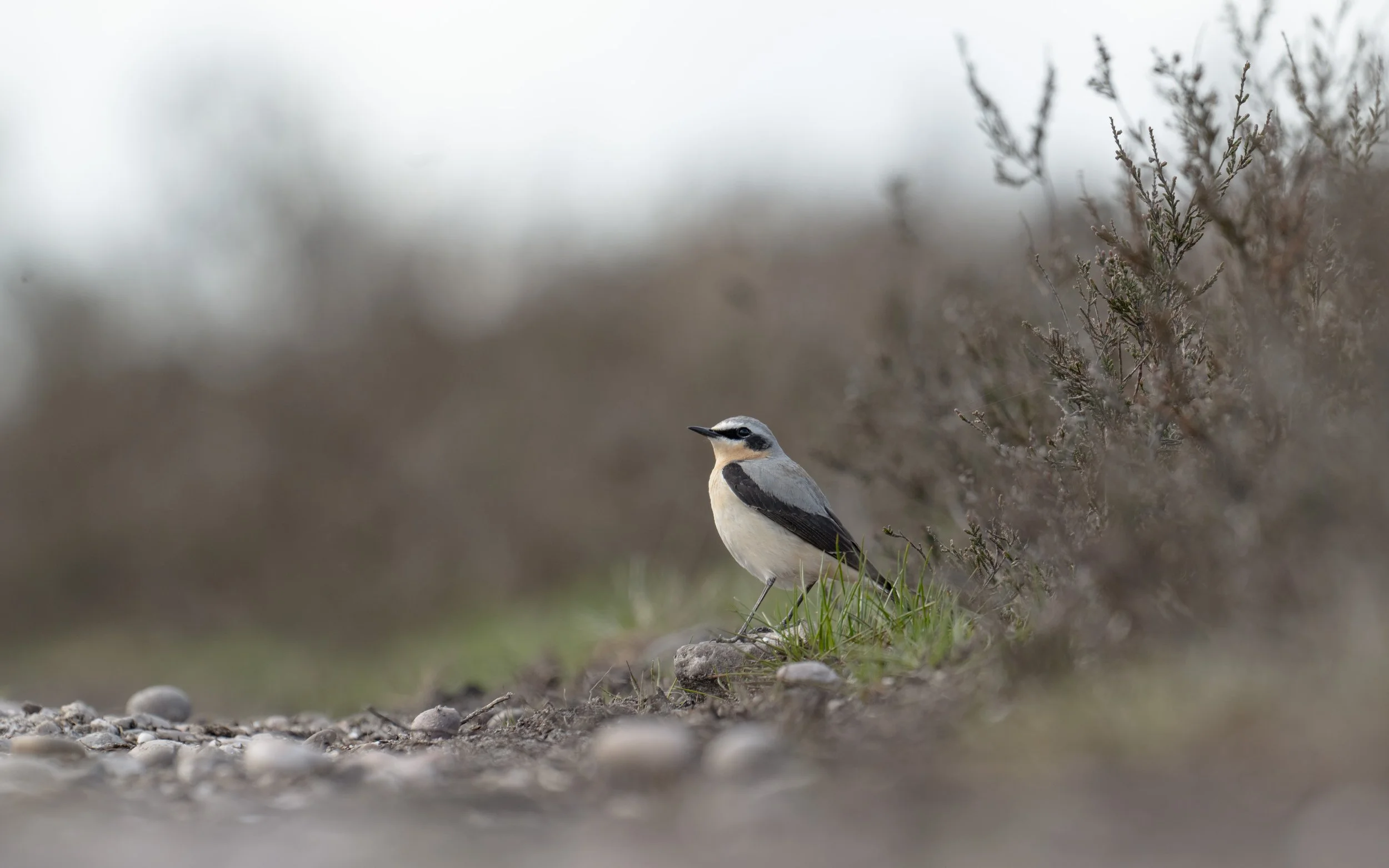
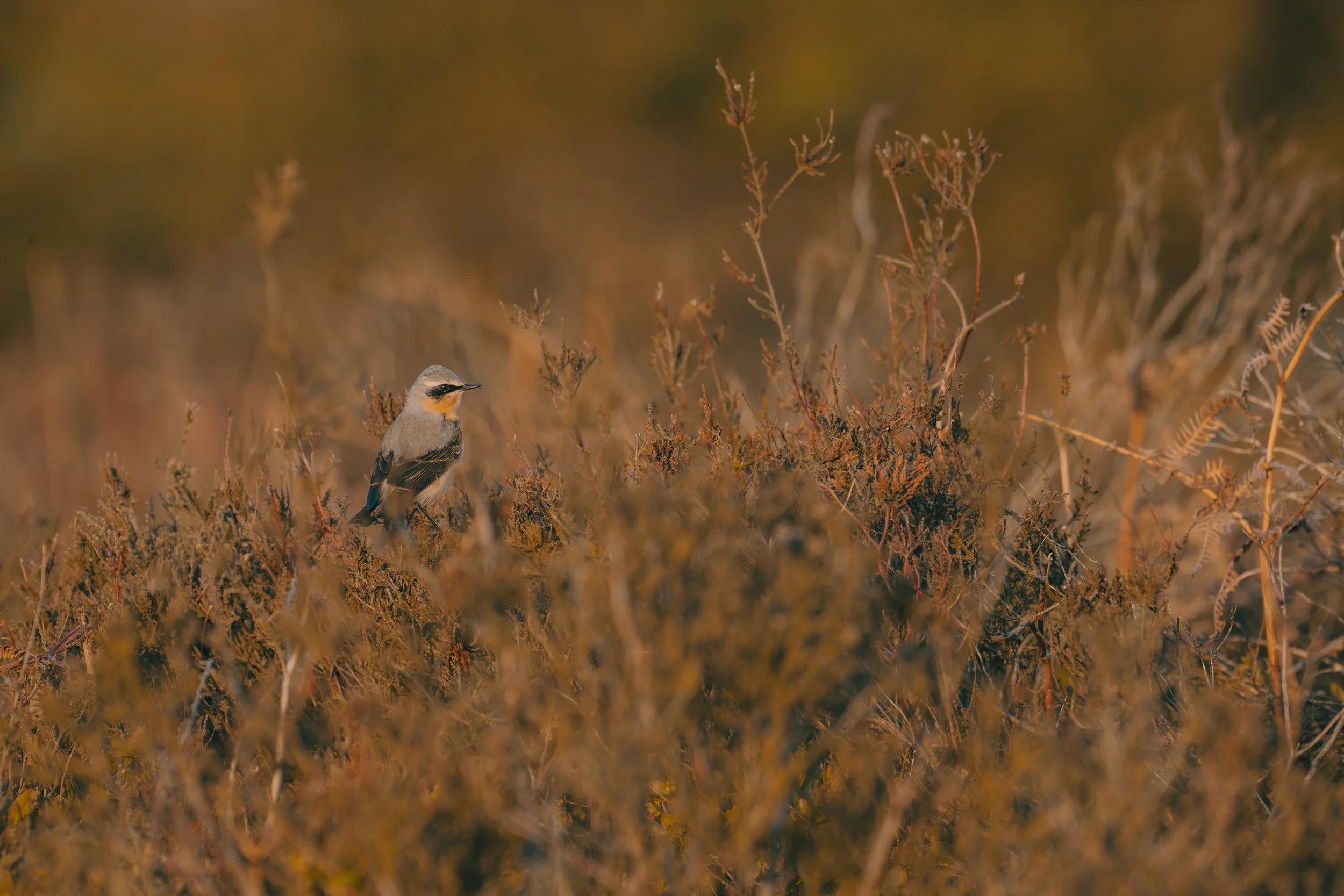
The wildlife appeared almost instantly, much to our surprise, with a wheatear sitting proudly on the heathland in the morning sun.
Close enough to enjoy, close enough for some respectable frames, though perhaps not quite the intimate kind of result solitary photography sometimes allows. Then again, that is the trade-off with a group outing — you sacrifice a little photographic perfection in exchange for company, conversation and shared excitement, and on this occasion it was more than worth it.
Wheatear at sunrise on Cannock Chase
From there, we headed into the nearby woodland in search of deer. The larger group naturally began to break into smaller groups as conversations flowed and people gravitated towards different interests and subjects. I spent a fair amount of time chatting with Joanna Noble and Laura Peyton, and one particular conversation stayed with me long after the day had finished.
We spoke about some of the challenges women can face whilst pursuing wildlife photography, particularly when travelling alone to unfamiliar locations or spending long periods of time in remote places. It was something I had perhaps not fully appreciated before. Wildlife photography is a hobby that has helped so many people, myself included, and I firmly believe that nature should be accessible to everyone without fear of intimidation, unwanted attention or feeling unsafe.
It genuinely saddened me to hear that experiences like that can still be a concern for some photographers.
Now, I am under no illusion that I am going to change the world, but it did make me think about what I can do personally. At the very least, if a fellow photographer ever wanted company visiting a location they felt uncertain about, I would happily meet them there and spend a day photographing together.
And for anyone who makes others feel uncomfortable whilst they are simply trying to enjoy a hobby they love, I only have one thing to say:
Don't be a dick!
Anyway, back to photography.
Cannock Chase itself is a fascinating place to explore. Covering around 26 square miles, it is a National Landscape (formerly an Area of Outstanding Natural Beauty) made up of a mixture of ancient woodland, commercial forestry, open heathland, grassland and wetlands. This variety of habitats supports an impressive range of wildlife and means that every turn in the trail has the potential to reveal something new.
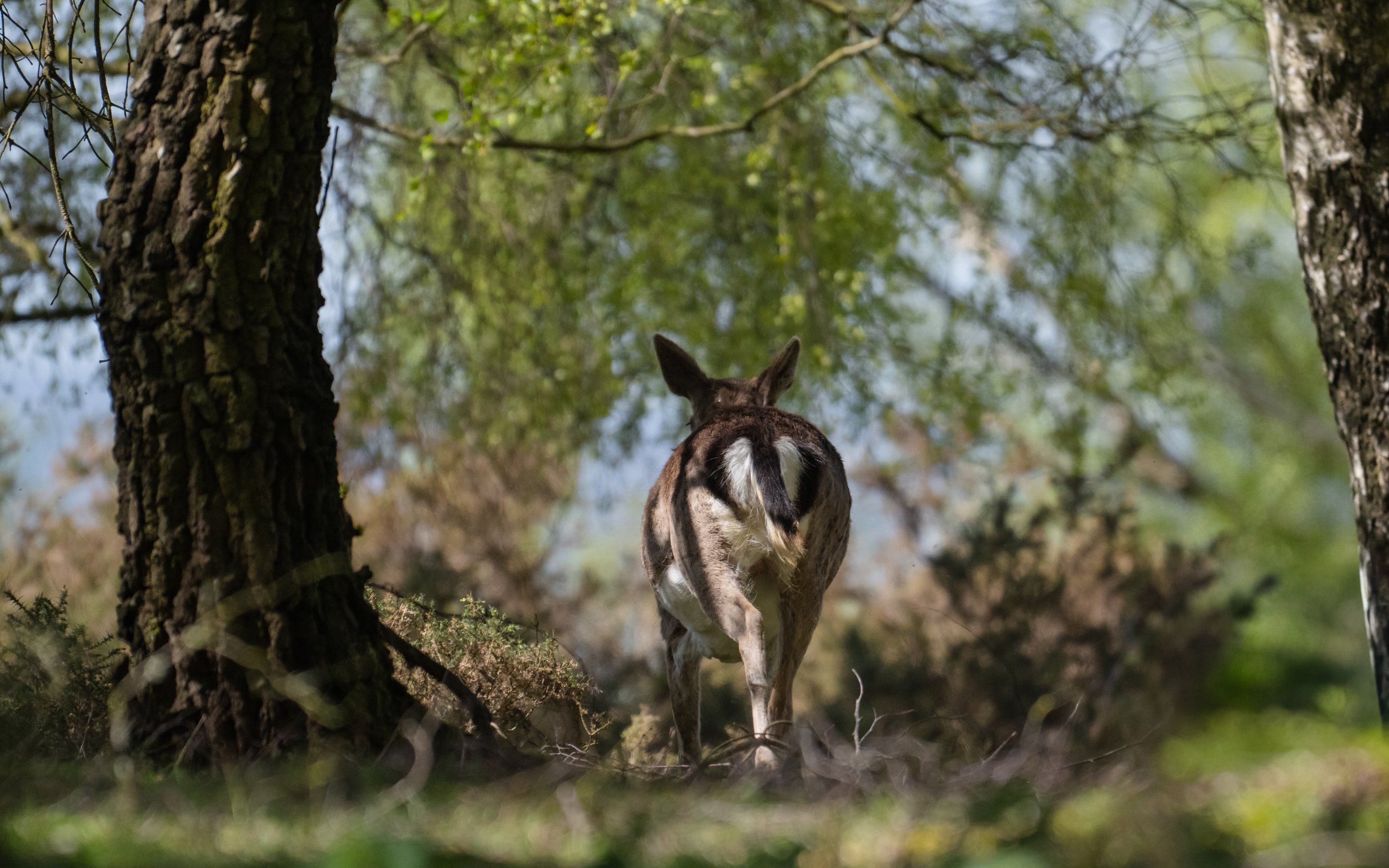
There were deer throughout the woodland, though the dense cover made photography difficult. I am far more accustomed to photographing deer at my local locations where, if I am honest, the deer are probably more comfortable with me than I am with them. On this occasion I decided not to force the issue and simply enjoyed watching them move through the trees.
At one point I heard a bird call that was unfamiliar to me. Out came the Merlin Bird ID app, which quickly informed me that I was listening to a willow warbler.
Excitement followed.
The photographs did not.
The willow warblers remained the day's frustrating almost-moment.
I heard several.
I saw none.
Still technically a lifer left hanging in the balance.
Over the course of the morning we covered more than 20,000 steps and encountered a variety of species, some of which I will list below. As morning gradually turned into afternoon, we all headed off for a well-earned lunch and coffee together. It was a welcome chance to rest tired legs, share stories from the morning and enjoy each other's company before smaller groups naturally formed for the final wander of the day.
That final quieter spell proved the most productive for me photographically. In a group of just four people, the wildlife seemed noticeably less wary, and I managed my better wheatear images during this period. The slower pace also allowed for a little more concentration behind the lens.
But the photographs, if I am honest, were only half the point of the day.
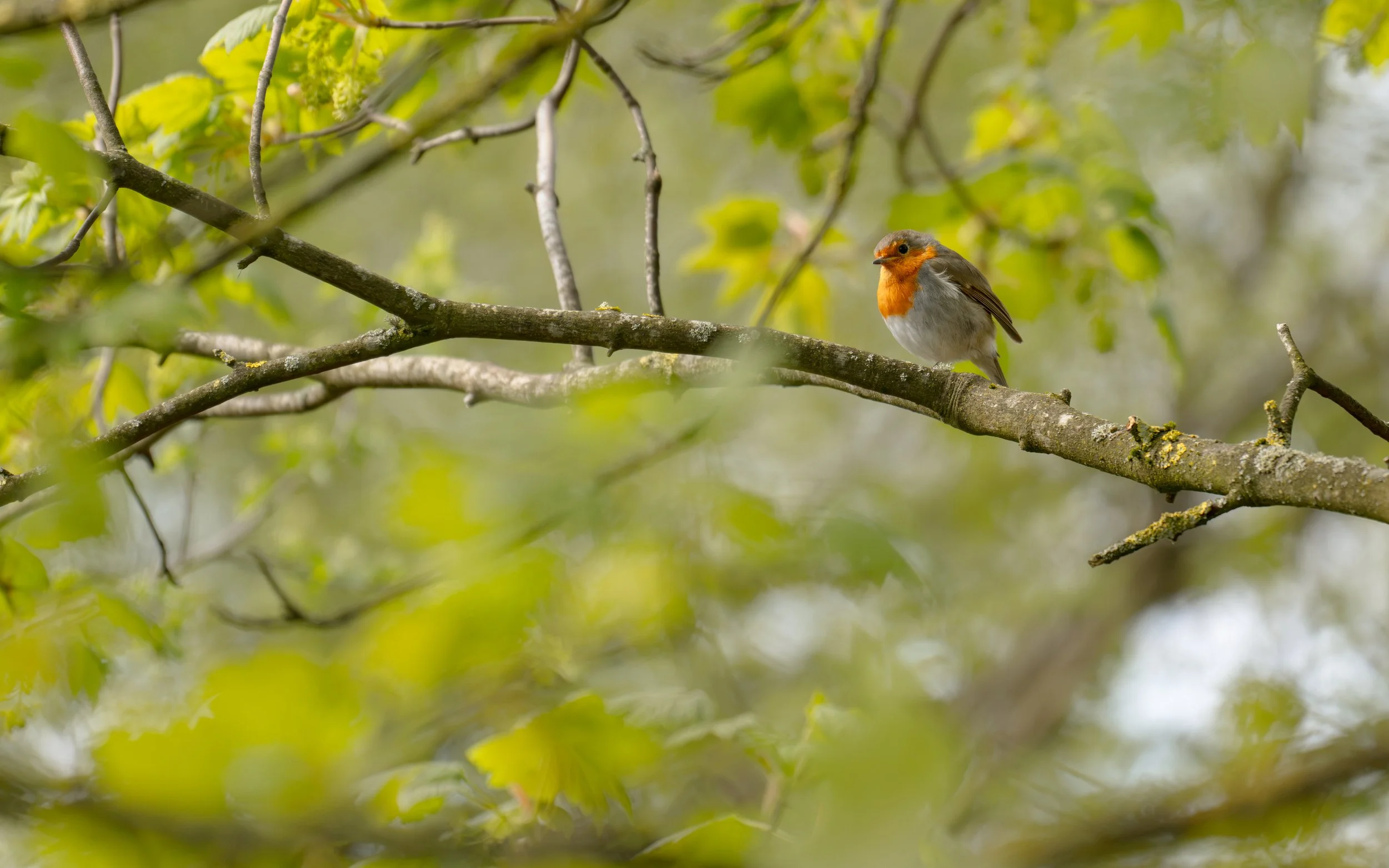
The species we saw on the day in no particular order
More Than Just a Meet-Up
What Andy has built with The Wild Den deserves recognition.
Not only has he created a wonderful community of like-minded photographers, but he has also created something that can be surprisingly difficult to find online — a genuinely supportive environment. It is a place where people can ask questions, make mistakes, learn new skills and share experiences without fear of ridicule, criticism or being told they are doing things the "wrong" way.
Photography can be a strangely solitary hobby at times. Hours spent alone in hides, alone in woodland, alone beside rivers and alone behind a camera. There is a certain peace in that solitude, and I would not trade it for anything.
But there is also enormous value in finding a community of people who understand the same frustrations, celebrate the same successes and get excited about the same things.
The Wild Den has that.
It does not matter what level of photographer you are either — beginner, experienced, wildlife, landscape, casual enthusiast or professional — everyone is welcomed in exactly the same way.
That is rare in person.
Even rarer online.
If you would like to learn more about The Wild Den, you can find more information here: https://www.thewildden.com
Chiffchaff, the undisputed sound of springs arrival
Saturday evening — North Again
By the end of Saturday afternoon I was tired, but in that satisfying way that only comes after a full day outdoors. The day had been successful, the company had been great, and I felt genuinely grateful to have been part of it.
Rather than head straight back south, I decided to make the most of being in the area and jumped in the car for the hour-long drive back north to Matlock, where I would stay for the night.
The journey itself was an easy, unhurried cruise back through the evening landscape. Mostly it was spent replaying the day in my head, mentally forming parts of this blog, and already looking ahead to Sunday morning’s plans.
Originally, the intention had been to visit Dovedale — a serious contender for my favourite place in the UK so far. Little did I know, a phone call early the next morning would shift those plans entirely.
And in hindsight, I am very glad it did.
Sunday — Wellies and Wildlife
Another early start. This is becoming a habit.
As I crawled out of the hotel bed, I thought to myself, I am too early for the hotel breakfast, but there is no way I am delaying wildlife photography for a piece of bacon that has been kept warm by a lamp.
So it was a quick detour to McDonald’s for a coffee and a McMuffin. Some might turn their nose up at it, but the reality is simple — wherever you are in the world, if there’s a McDonald’s, you know exactly what you are getting. Reliable, quick, and usually open when nothing else is. And to be fair, the coffee isn’t half bad either.
As I pulled out of the drive-thru, my phone rang.
At that time of morning, I can only assume it is either bad news or someone equally sleep-deprived. It was neither — it was Mike Phelps. He already knew I was planning to head to Dovedale before making my way home, but he suggested an alternative: Millers Dale. Somewhere I hadn’t explored before.
It didn’t take long to change plans.
Sat nav reset.
Off we go.
By the time I reached Millers Dale, sunrise itself had largely passed, but the landscape more than made up for it. Steep cliffs, rolling green hills and a winding river cutting through the valley. That proper countryside feeling that I am beginning to realise I will probably always be addicted to, no matter the exact environment.
Woodland, moorland, mountains, rivers — if it feels wild and away from noise, I am happy.
Millers Dale was a completely new experience for me, and one that immediately felt like somewhere I would return to.
I jumped out the car, put my wellies on, grabbed the camera gear and the tripod and dropped down to the river at the earliest opportunity. The River Wye was low and calm, perfect for working at water level. One of the things I love most about places like this is how accessible the river is — only a few inches deep in most areas. No specialist gear required!
There is something truly fulfilling about standing in clear running water in a pair of wellies. Instead of feeling separate from the environment, you feel part of it — and that, for me, is what makes these places so rewarding.
I wandered along the riverbed for a while until I met a fly fisherman, an older gentleman who was more than happy to stop for a chat. When I mentioned I was looking for dippers, he simply smiled and said, “I can show you where they are.”
That kind of moment doesn’t happen often.
Most wildlife locations are closely guarded secrets, and understandably so. So to have someone willingly share something like that felt incredibly generous. He pointed me in the right direction and carried on with his fishing. I never caught his name, but I am genuinely grateful.
It made all the difference.
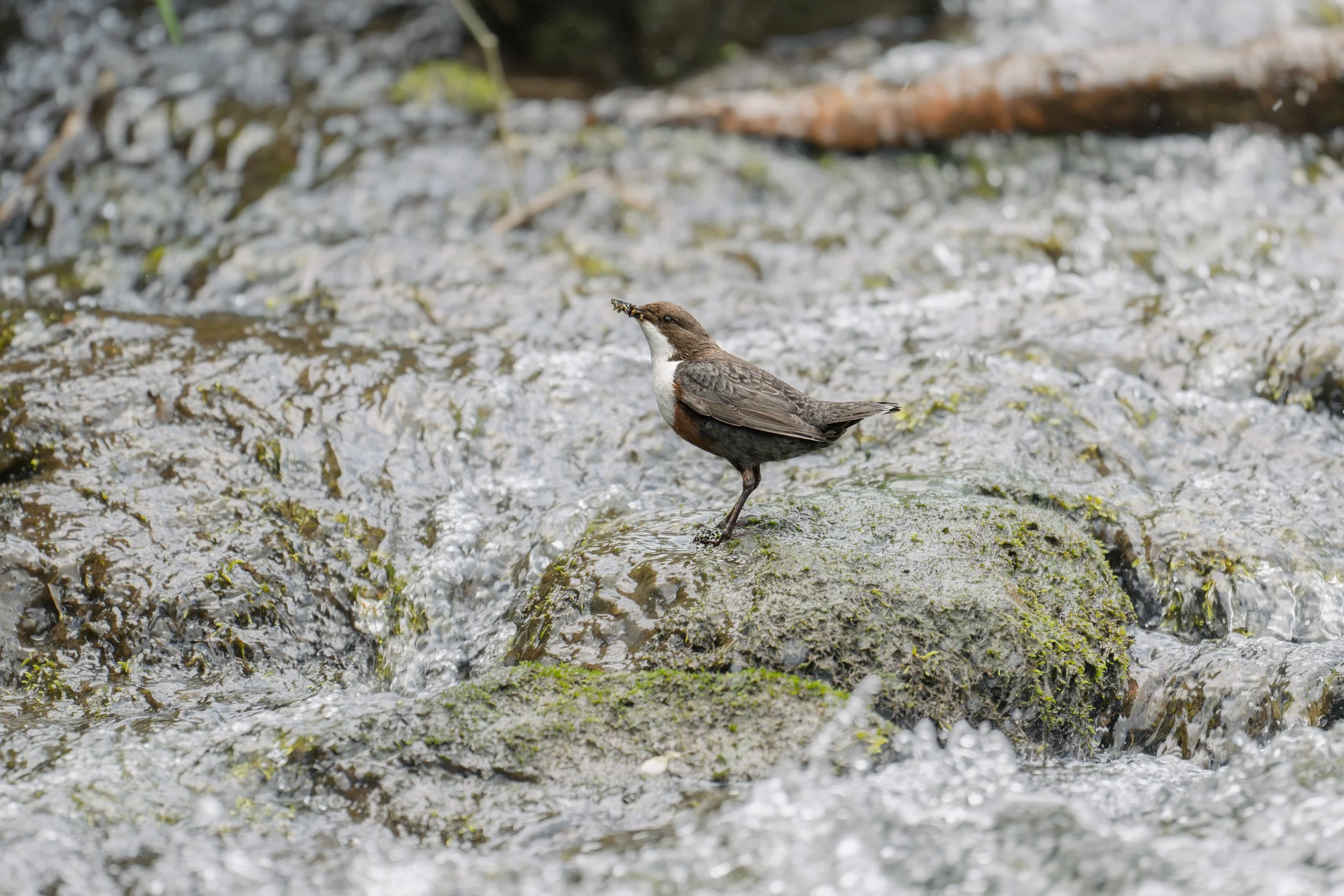
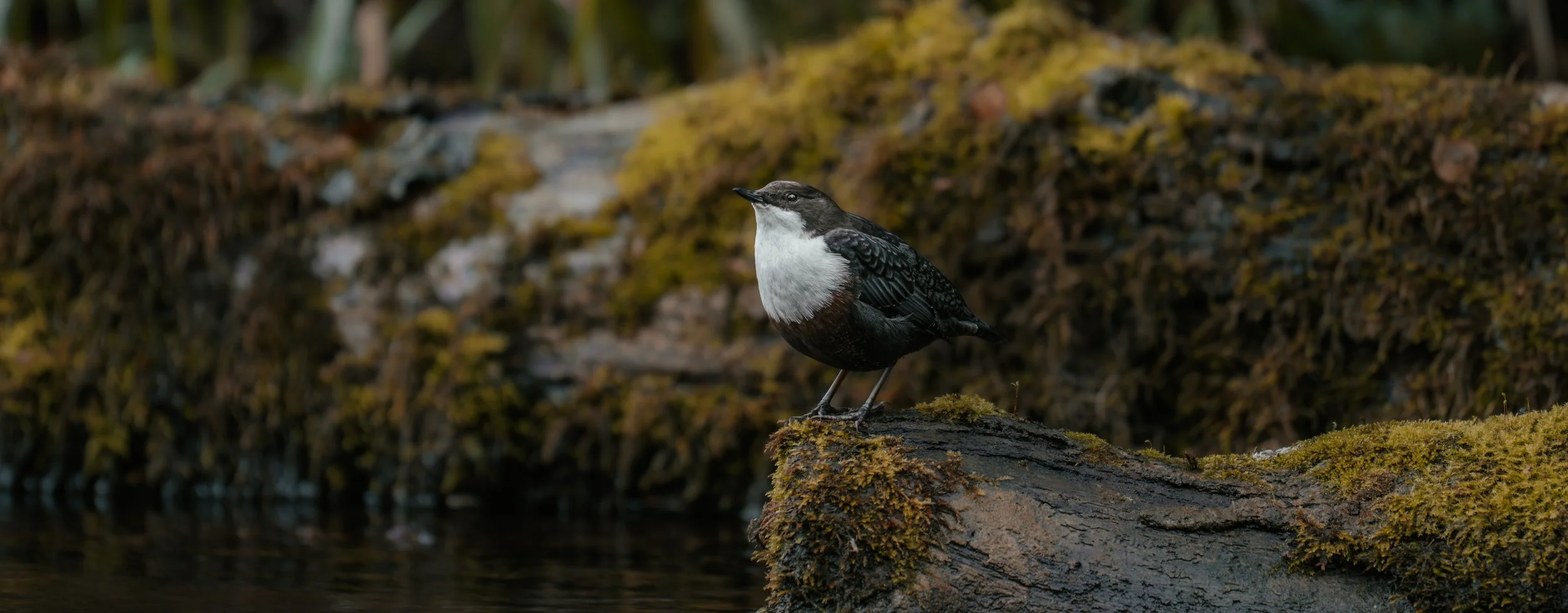
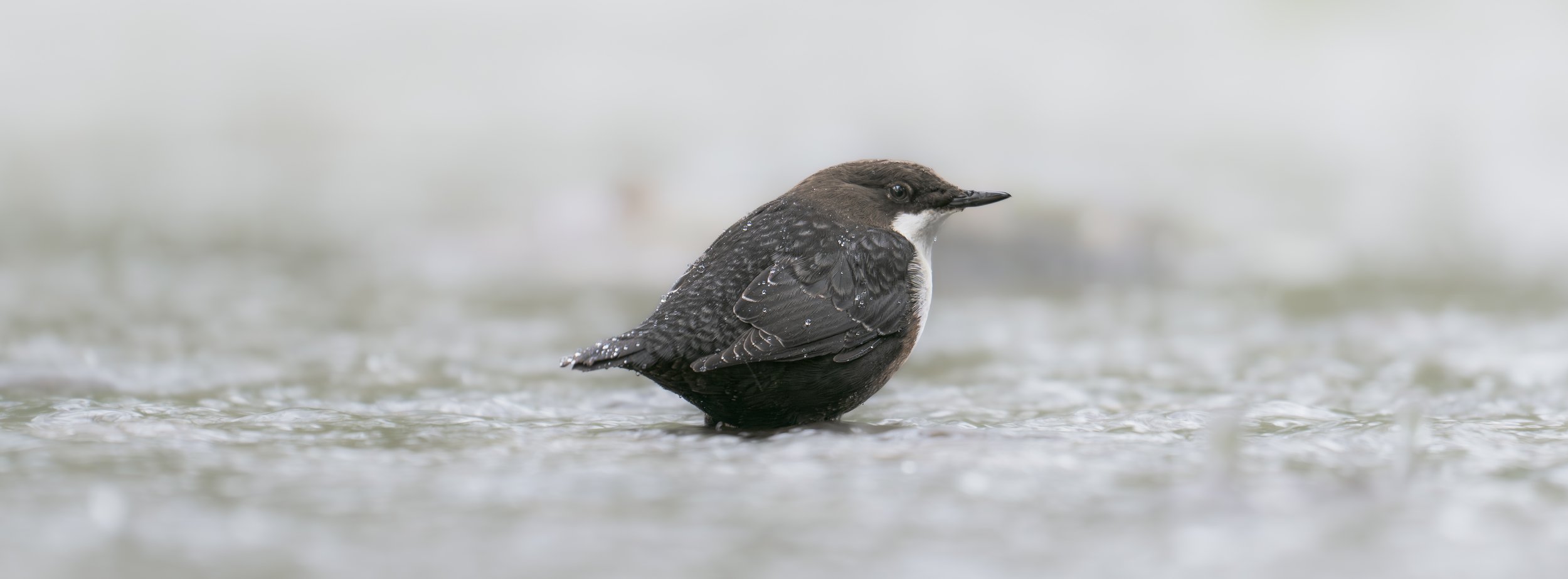
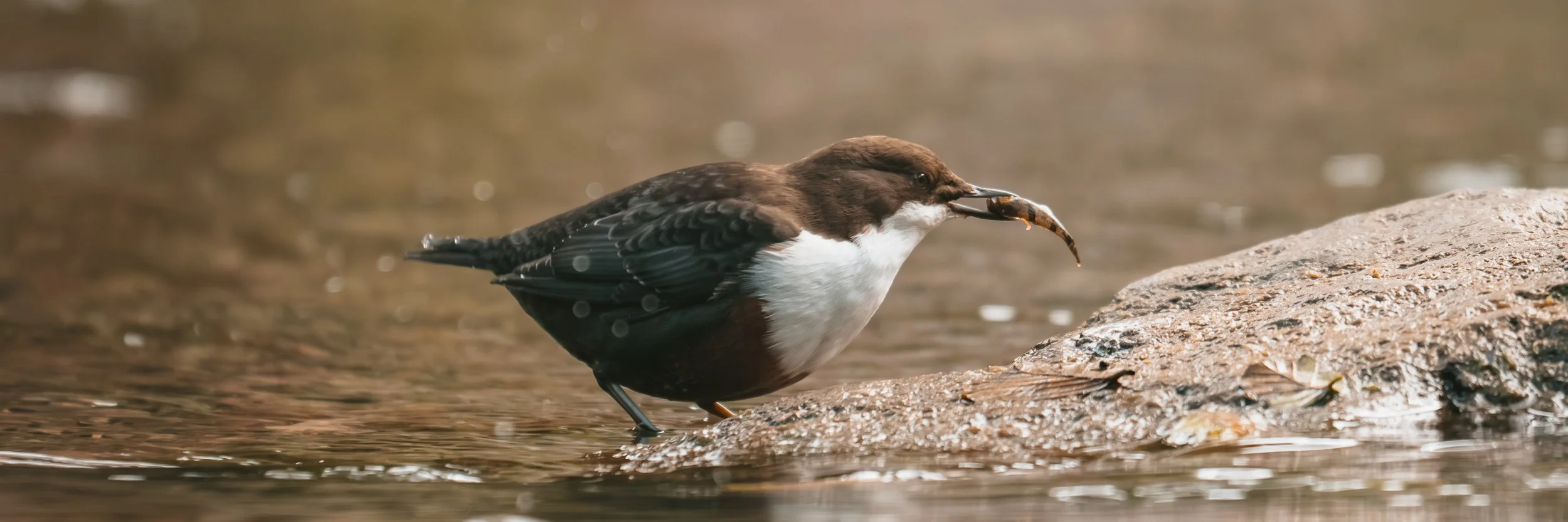
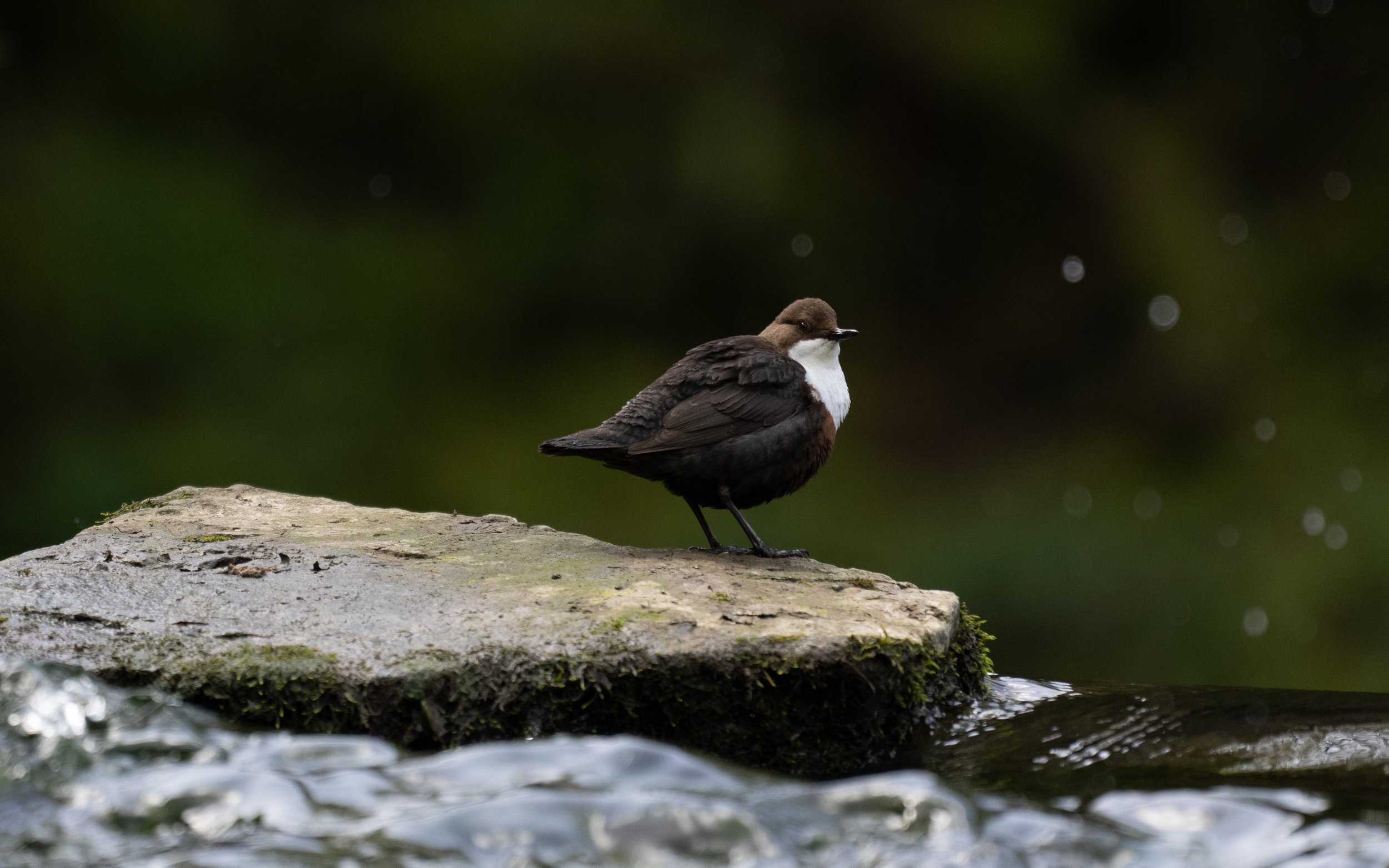
Dippers have always been one of my favourite birds — comfortably sitting in my personal top ten — so even seeing them would have made the morning. But finding an active nesting site took it to another level entirely.
Thanks to the kindness of a stranger simply going about his day, I was able to spend time observing and photographing them in a way I would not have otherwise experienced. Some of my best dipper images to date came from that morning.
Moments like that stay with you.
Standing alone in the river, scanning rocks and watching the current, completely absorbed in the small movements of birds disappearing and reappearing along the waterline — that was the real highlight of the weekend.
No rush.
No noise.
No pressure.
Just water, wellies and wildlife.
And it struck me, standing there in that quiet space, how rare it is to feel completely removed from everything else. No deadlines, no distractions, no background noise of everyday life — just the simple act of being present in a place that asks nothing of you except to notice it.
That feeling is what I chase more than anything else with a camera.
Not just the images, but moments like this where everything slows down enough for you to actually feel where you are.
Why It Meant More Than I Knew
What I did not know at the time, standing in that river on Sunday morning, was that the following days would look very different.
I came home to the news that I had lost my job due to wider challenges in the industry.
Life, as it often does, waited until the peaceful bit was over before throwing something difficult in my direction.
And maybe that is partly why this weekend now sits differently in my mind.
Without knowing it at the time, I had given myself three days of exactly what I would need: space to think, good people, beautiful places and the reminder that however uncertain life becomes, there are still rivers to stand in, birds to photograph and sunrises worth waking up for.
That matters.
Looking back now, The Wild Den Weekend was never really about the photographs. Of course, I came home with images I am proud of, but the photographs are only part of the story. What I will remember most are the conversations on woodland trails, the laughter, the shared enthusiasm for wildlife, the kindness of strangers and the feeling of being surrounded by people who simply enjoy being outdoors and appreciate the natural world.
As I mentioned previously wildlife photography can sometimes feel like a solitary pursuit, but weekends like this remind me that it does not have to be.
So before I finish, I want to say a huge thank you to Andy Green. What started as an idea has grown into something genuinely special. The Wild Den is more than a website, more than a collection of tutorials, challenges and videos. It is a welcoming community that encourages people to learn, improve, connect with nature and, perhaps most importantly, connect with each other.
For me the first Wild Den meet-up was a huge success and I feel fortunate to have been part of it. Thank you to Andy for organising it, thank you to Mike for sharing his local knowledge, and thank you to everyone who came along and made it such an enjoyable weekend.
As for me, I left with muddy boots, full memory cards, a few new friends, and a renewed appreciation for just how important wildlife, photography and community have become in my life.
Whatever life throws at you, don't forget to make time for the wild.